A proposal accepted on a public page becomes an agreement. The agreement knows what recurs and raises invoices on schedule. Overdue ones get chased. It's the part of the job most tools leave to your accounting software and your memory.
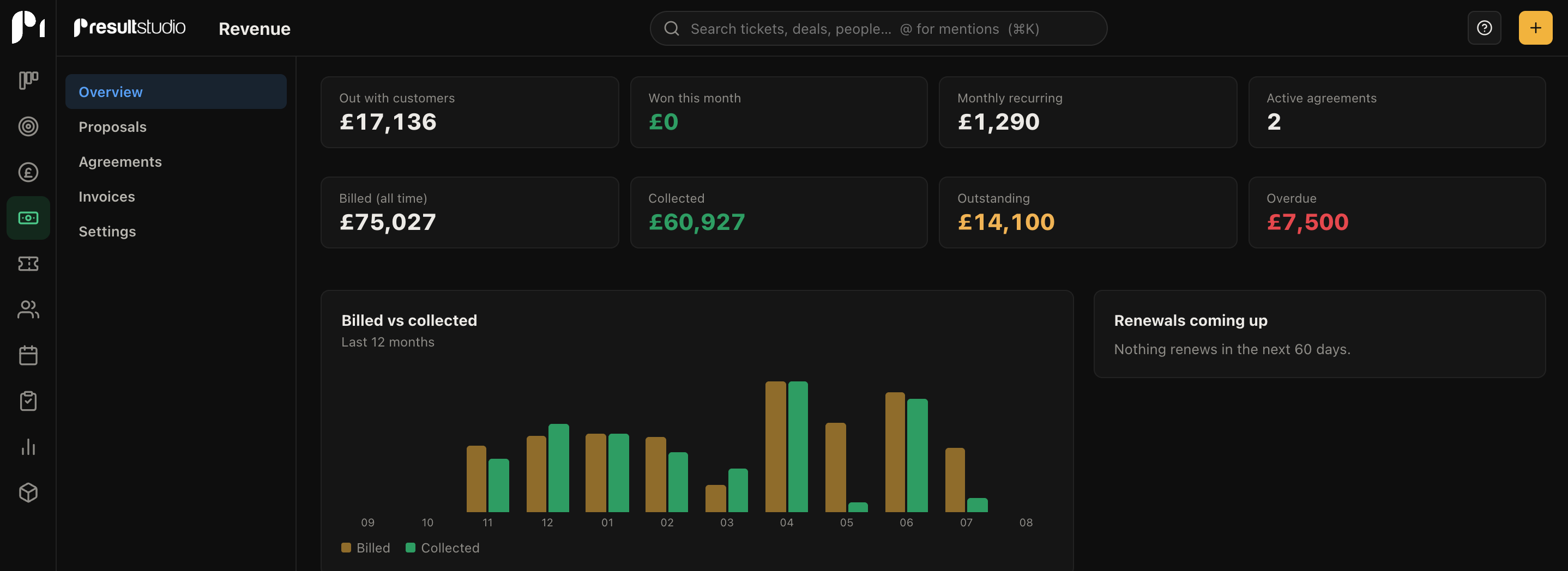
Build priced line items with discount guardrails, attach the designed proposal document you already make, and send a link. The customer reads it, types their name, and it's accepted with a record of when and by whom.
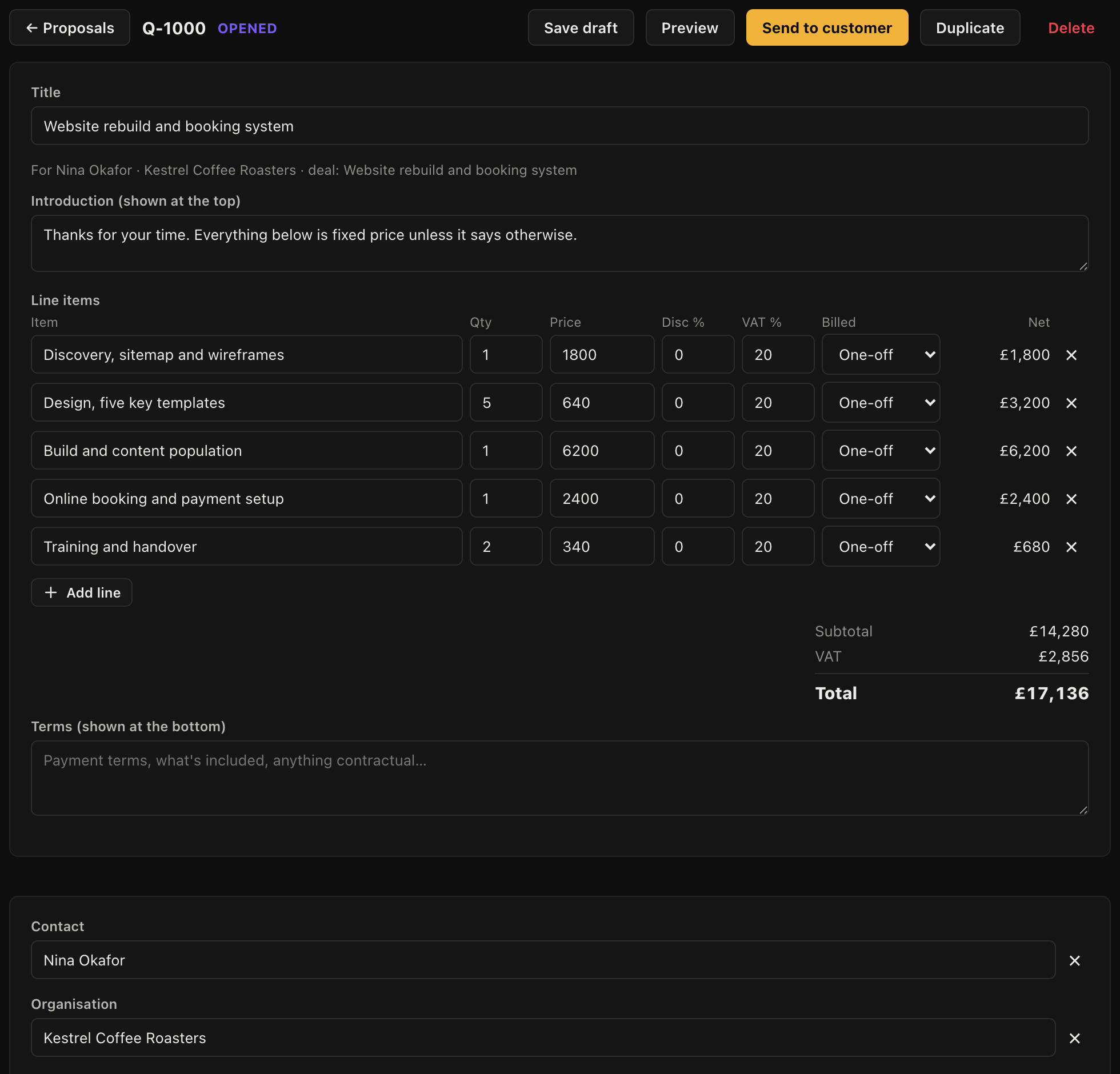
Acceptance creates an agreement: the ongoing record of what was agreed, its term and its renewal date. Recurring lines carry their own billing schedule, which is what makes the next part automatic.
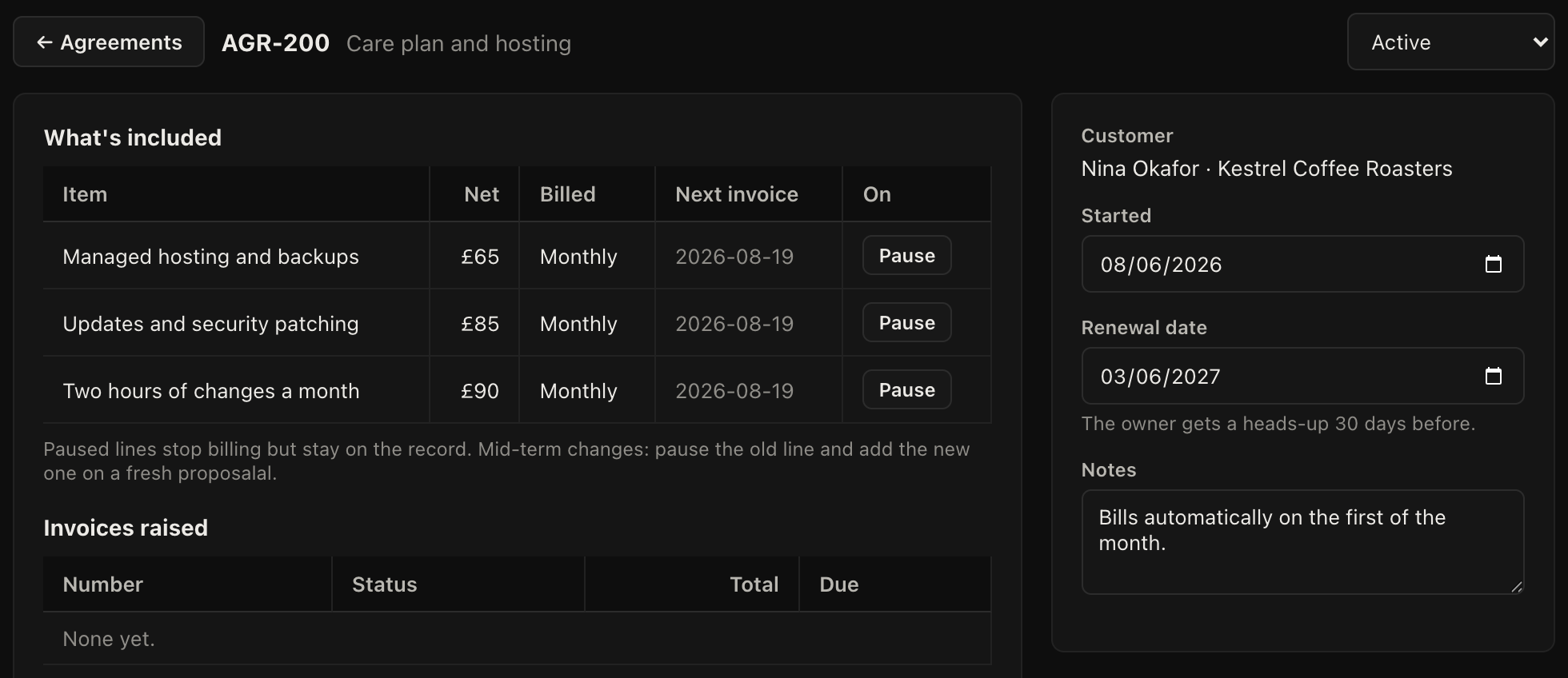
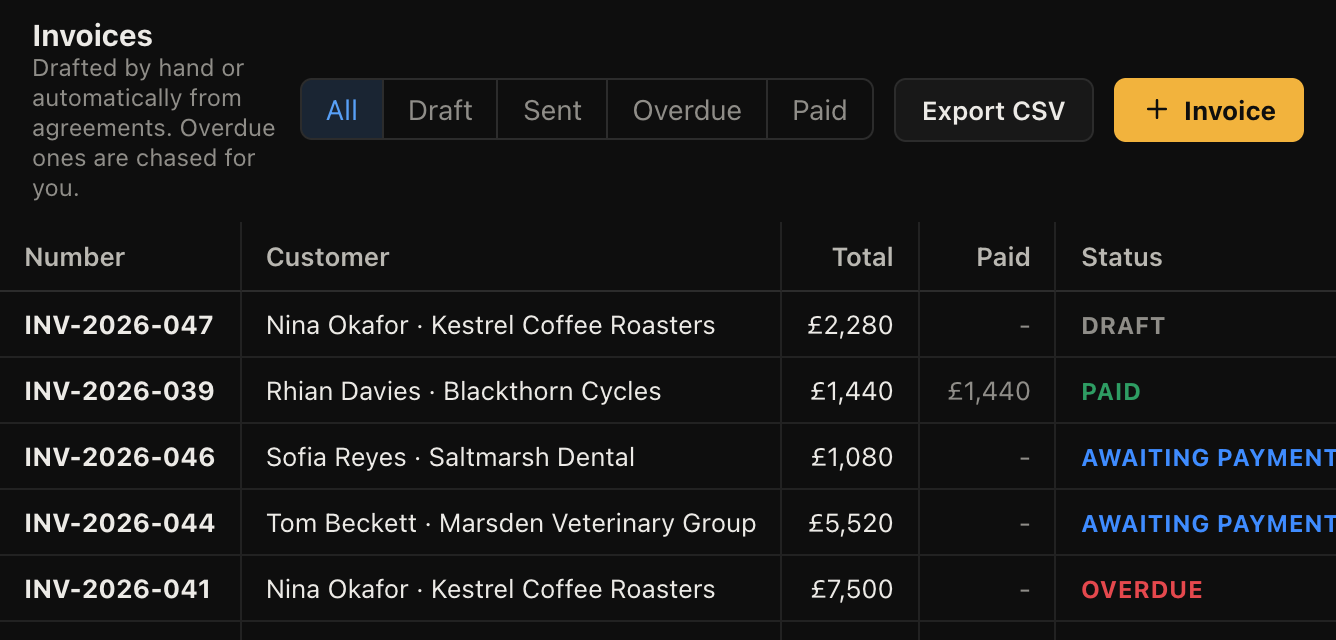
Recurring lines draft their own invoices when they fall due. Each invoice has a public page with your branding, VAT handled, and your bank details for transfer. If it goes overdue, reminders go out on the schedule you set.
Not yet. Invoices show your bank details for transfer today, and card payment is on the roadmap. If that's the deciding feature for you, tell us; roadmap order listens to beta users.
No, and it doesn't try to. It handles the customer-facing money: proposals, agreements, invoices and chasing. Your accountant keeps their books; invoices export to CSV whenever they need them.
Yes. Logo, accent colour, company address, VAT number, bank details and a footer note, set once in the revenue settings and carried on every customer-facing page and email.
Attach the PDF you designed alongside the priced lines. The customer sees your document and signs on our page, so you keep your design tools and still get the signed record.
Agreements that bill themselves and invoices that chase themselves give you the part of finance no one enjoys doing by hand.
